
Picture Books About Belonging: A Parent's Guide
Picture books about belonging can give your child a gentle way to explore what it feels like to be included, valued, and welcome. Magikast offers a rainforest book about seeing the world from another's point of view and a ladybug book about trying something new and finding a place in a group.
Why belonging matters to young children
Belonging is the feeling that there is a place for you, and that people notice and welcome you. For a young child, it can show up in small moments: being invited into a game, having an idea listened to, or feeling safe enough to be themselves.
Stories can give children a little distance from their own worries. A character's experience can help your child name a feeling, notice that other people may see things differently, or imagine what it might be like to join in. There is no need to turn every story into a lesson. Sharing a quiet moment and listening to what your child notices can be enough.
How to talk about belonging in words a child understands
Try a simple explanation: “Belonging means you have a place where people want you, and you can be yourself.” You might add, “You can belong even when you're still learning, or when you like different things from someone else.”
Keep your words close to your child's world. Talk about the family, classroom, playground, team, or group of friends they know. If your child is upset, listen before explaining. “That sounds lonely” or “You wanted to be included” can show that you understand without rushing to fix the feeling.
Children's story books about belonging can make space for these conversations through characters and situations. You can follow your child's lead, whether they want to talk about the story, connect it to their own day, or simply turn the page.
Four things to try at home
Small, repeatable moments can help a child feel that they have a place in the family and in the groups around them. Pick one idea that feels natural for your household.
- Make a short daily check-in part of a familiar routine. Ask, “When did you feel included today?” If your child isn't ready to answer, share a moment from your own day first.
- Give your child a real part in a shared task, such as choosing a family snack or helping set the table. Notice their contribution specifically: “Your idea helped us decide.”
- Practice ways to join a game or conversation together. You might try, “Can I play too?” or “What are you building?” Let your child choose words that sound like them.
- Make room for different interests and ways of taking part. A child may want to watch before joining in, or enjoy a different activity from the rest of the family. Let them know there is still a place for them.
Questions to ask after reading
There isn't a right answer to these questions. Ask one at a time, give your child a little room to think, and let their response guide what you ask next.
- What do you think helped the character feel welcome?
- Was there a moment when the character saw things differently from someone else?
- How might the character feel when someone invites them to join?
- What could you say if you wanted to join a game?
- When do you feel most like you belong?
Choose a story that gives your child room to learn
The rainforest book suits a child who loves animals or asks lots of questions. It begins when a wise old tree gives your child a wooden lens. Through it, the backyard becomes a rainforest, and your child sees the world from the animals' points of view.
The ladybug book may suit a child who loves bugs, singing, or bedtime stories, and a child who feels shy about trying something new. It begins when a firefly invites your child to the garden's yearly concert. A ladybug choir is missing its seventh singer and needs your child to learn its song.
Both books make your child the story's hero. They are written and illustrated by real people, and your child is brought into the illustrations from one photo. Each one offers a different way to talk together about perspective, participation, and belonging.
Books that fit
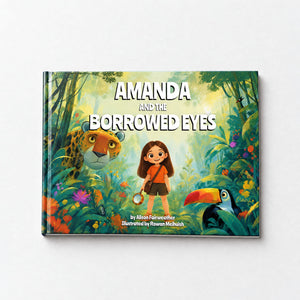
The Borrowed Eyes
Ages 4-8For ages 4 to 8, this rainforest book can suit a child who loves animals or has lots of questions. It opens with a wise old tree giving your child a wooden lens, which lets your child see the backyard as a rainforest from the animals' points of view.

The Seventh Ladybug
Ages 4-7For ages 4 to 7, this ladybug book may appeal to a child who loves bugs or singing, or feels shy about trying something new. It opens with a firefly inviting your child to the garden concert, where a ladybug choir needs a seventh singer to learn its song.
Questions
Does belonging mean everyone has to be the same?
No. Belonging means having a place and being welcome as yourself. Children can have different interests, feelings, and ways of joining in while still being part of a group.
What can I say if my child feels left out?
Start by listening and naming what you hear: “You wanted to be included, and that hurt.” Ask whether your child wants help thinking of what to do next, or would rather have you listen for a while.
What if my child doesn't want to talk after the story?
Let the conversation rest. Your child can enjoy the story without discussing it, and you can return to a question another day if it feels right.
More guides
Make them the hero
Pick a story, add one photo, and see a free preview before you pay.
See all our books