
Picture Books About Curiosity for Curious Kids
Picture books about curiosity can help young children enjoy asking questions, noticing details, and wondering what might happen next. Read together, then give your child time to ask, guess, and explore ideas in their own words.
Why curiosity matters in the early years
A child's questions are a way of reaching out to the world: What is that? Why did it happen? What would happen if we tried this? Making room for those questions helps your child feel that wondering is welcome, even when you do not have an answer right away.
Curiosity can also make ordinary moments feel like small discoveries. A puddle, a familiar animal, or a sound outside can prompt a child to look more closely and share what they notice. Books give you a calm place to enjoy that kind of wondering together, without needing to turn every question into a lesson.
How to talk about curiosity in child-friendly words
You might say, “Curiosity means wanting to find out more.” For a younger child, try, “You noticed something and want to know about it.” Then give the question room to breathe. A pause can be an invitation for your child to add an idea or ask another question.
If you are unsure, be honest and curious alongside your child: “I don't know yet. What could we look for?” You can also repeat the question in your own words so your child knows you heard it. The aim is not to answer everything perfectly. It is to show that questions are worth sharing.
Things to try at home
Small, low-pressure moments are often enough. Choose one idea that fits your day and let your child's interests lead.
- Take a short “notice walk” indoors or outside. Invite your child to name one thing they see, one sound they hear, and one thing they wonder about.
- Choose an everyday object and take turns asking questions about it. What might it be used for? What does it feel like? What else would you like to know?
- Make a family question jar. Add questions your child asks, then pick one to talk about together when you have a quiet moment.
- Let your child be the question leader during a familiar routine, such as snack time or getting ready for bed. Follow their topic for a few minutes instead of rushing to the next task.
Questions to ask after reading
There is no need to quiz your child or get through every question. Pick one that feels natural, and listen to the answer without hurrying to correct or explain.
- What made you curious in this story?
- Which part would you like to look at again?
- What question would you ask one of the animals or characters?
- What do you think might happen if the story continued?
- Did anything remind you of something you have seen or wondered about?
Children's picture books about curiosity
For a child who wants to explore through a story, these books put your child at the center of the adventure. Each is written and illustrated by real people, with the author and illustrator credited on the cover. Your child is brought into the illustrations from one photo, and your child's first name appears in the story.
The rainforest book suits a child whose questions keep coming, while the dinosaur book connects curiosity with learning when to ask for help. The jungle book follows a child who keeps asking questions while exploring. Choose the setting your child is most likely to want to step into.
Books that fit
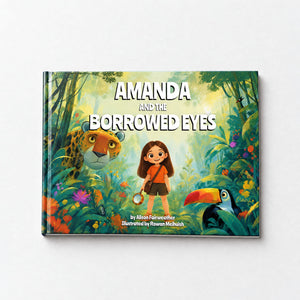
The Borrowed Eyes
Ages 4-8For ages 4 to 8, the rainforest book starts with your child's questions, including some the grownups cannot answer. A wise old tree gives your child a wooden lens, and the backyard becomes a rainforest where your child sees the world the way each animal does.
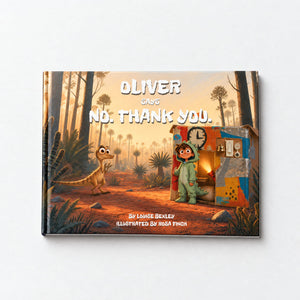
Says No Thank You!
Ages 5-8For ages 5 to 8, the dinosaur book is a fit for a child who loves dinosaurs and prefers doing things alone. Your child builds a time machine and travels back to meet real dinosaurs, then finds that getting home takes three buttons pressed at once and more than two hands.

Curious Name Keeps Walking
Ages 3-6For ages 3 to 6, the jungle book begins when a rainbow feather drifts past the window. Your child follows it into a backyard turned jungle, asking each animal where the light is going, which gives a curious animal lover a question-led adventure.
Questions
What can I say when my child asks a question I cannot answer?
Try, “I don't know yet. What could we find out?” This lets your child know it is fine not to have an instant answer and keeps the conversation open.
Should I correct my child's guesses while we read?
First, invite your child to explain what they are thinking. You can share what you know afterward, while keeping their questions and ideas part of the conversation.
Can a teacher use these stories for a group conversation?
Yes. Read a passage, pause for children to share what they noticed, and invite them to ask their own questions. Children can have different ideas about the same moment.
How do I choose among the three stories?
Start with your child's interests and age range. The rainforest book is for ages 4 to 8, the dinosaur book for ages 5 to 8, and the jungle book for ages 3 to 6.
More guides
Make them the hero
Pick a story, add one photo, and see a free preview before you pay.
See all our books