
Picture Books About Nature: Slow Down and Notice
Picture books about nature can help young children pause, notice what is around them, and find words for their questions. Pair a story with a few minutes of looking closely outdoors, then invite your child to share what they spotted and wondered about.
Why slowing down matters for young children
A leaf, a bird call, or a tiny bug can be easy to pass by when everyone is hurrying. Taking a little time to notice gives your child a chance to look carefully, wonder, and tell you what caught their attention.
Nature can offer plenty to talk about without needing a big lesson. Your child might notice a change in color, a sound they have not heard before, or how two animals behave differently. Their questions can lead the way, even when you do not know every answer.
Picture books about mindfulness can also help make the idea of pausing feel familiar. A story gives you something to notice together, and a gentle invitation to look, listen, and wonder can carry that feeling into an ordinary walk or a moment by the window.
How to explain noticing nature in child-friendly words
Keep it concrete and easy to try. You might say, “Let’s slow our feet and see what we can find,” or, “What do you notice when we listen quietly?” Those words give a child a clear next step without making the moment feel like a test.
You can name what you notice, then leave space for your child. Try, “I see a little patch of green. What do you see?” If your child spots something different, follow their lead. There is no need to rush toward one right answer.
When a question stumps you, you can say, “I’m not sure. Let’s look closely together.” That shows your child that curiosity can continue even when an answer does not come right away.
Four simple ways to practice at home
Choose a small moment that fits your day. A few minutes of looking closely can be enough to make noticing feel like a shared habit.
- Take a slow look outside a window or at a doorstep plant. Ask your child to find one color, shape, or movement they had not noticed before.
- Listen outdoors for a short moment. Invite your child to name the sounds they hear, then ask which sound they would like to listen for again.
- Choose one small natural object, such as a fallen leaf or a pebble. Look at its colors and edges together, and let your child describe what stands out.
- Make a simple noticing routine on a walk. Pause once to look up, once to look down, and once to listen. Let your child choose what to share.
Questions to ask after reading
After the story, let your child choose what to talk about first. Open questions make room for their own observations and ideas. You can also return to one page and take another quiet look together.
- What detail did you notice first?
- What did you wonder about while we read?
- How might the animal see or hear the world around it?
- Which part made you want to slow down and look again?
- What would you like to notice outside after reading?
A nature story that follows your child's curiosity
The rainforest book is for ages 4 to 8 and suits a child who loves rainforest animals or has a head full of questions. The story starts with questions your child asks that the grownups cannot answer. A wise old tree gives your child a wooden lens, and the backyard becomes a rainforest where your child sees the world the way each animal does.
As your child follows the story's opening, they encounter different ways of seeing nature, including the perspective of a sloth, a chameleon, and a tree frog. Each animal's point of view is told in its own short, poem-like passage. The story gives a curious child room to wonder about the natural world and how it might look to someone else.
Magikast books are written and illustrated by real people. Your child is brought into the illustrations from one photo you upload, and your child's first name appears in the story.
Books that fit
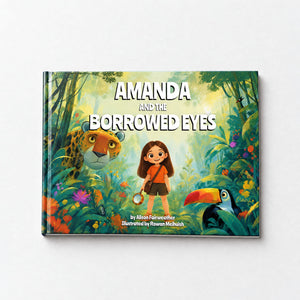
The Borrowed Eyes
Ages 4-8For ages 4 to 8, this rainforest story begins with your child's questions and a wooden lens from a wise old tree. Your child sees the backyard as a rainforest and encounters how different animals see the world, making it a fitting choice for curious nature and animal lovers.
Questions
Does noticing nature have to happen outdoors?
No. Your child can look from a window, notice a plant at home, or pause over a nature detail in a picture book. The useful part is taking time to look and talk together.
What if my child would rather move than sit still?
Let noticing happen while you walk, step, or explore. You can pause briefly to look or listen, then keep moving. Slowing down can mean paying attention for a moment, not staying still for a long time.
How can a teacher try this with a group?
Invite children to listen quietly for a moment, then ask what each person noticed. Comparing different observations can help children see that the same place may catch everyone's attention in a different way.
More guides
Make them the hero
Pick a story, add one photo, and see a free preview before you pay.
See all our books